Watch or listen
Download or print
This edition of Undercurrents is underwritten by Nexudus.
As pioneers of dynamic pricing in coworking, they’ve made this report possible and available for free across four formats.

Executive Summary
Walk into almost any coworking space today, and you’ll find pricing that changes.
A premium office overlooking the skyline commands more than one facing an internal corridor. A twelve-month commitment is rewarded with a lower monthly rate than a rolling agreement. Meeting rooms cost more during busy periods than quiet ones. Operators negotiate when occupancy falls and hold firm when availability becomes scarce.
Most of us wouldn’t describe any of those decisions as dynamic pricing.
And yet, that’s exactly what they are.
The biggest surprise from researching this report wasn’t discovering that coworking is adopting dynamic pricing. It was discovering that the industry has been practicing many forms of it for years. What’s changing isn’t the principle; it’s the speed, the scale, and the sophistication with which those pricing decisions can now be made.
Artificial intelligence has accelerated the conversation, but AI didn’t invent dynamic pricing.
It simply made it practical to evaluate hundreds of variables continuously instead of relying on spreadsheets, intuition, or quarterly reviews.
That shift matters because coworking manages one of the same fundamental problems as airlines and hotels.
Our inventory expires.
A chair sitting unsold in a furniture warehouse can still be sold tomorrow.
That meeting room, which sat empty between 10:00 and 11:00 this morning, cannot.
That hour has gone forever.
Throughout this investigation, we spoke with operators already using dynamic pricing, operators deliberately avoiding it, consultants advising workspace brands, and technology companies building the next generation of pricing engines.
Some were optimizing revenue. Others were trying to smooth occupancy across the week. Others weren’t trying to increase prices at all. They were trying to change customer behavior.
Perhaps the biggest lesson wasn’t about software. It was about judgement.
Because every conversation eventually returned to exactly the same question:
Just because we can optimize… should we?
Key Finding #1:
Dynamic Pricing isn’t really about charging more.
It’s about managing inventory that disappears every day.
Why This Report Exists
Dynamic pricing has become one of the most talked-about developments in coworking over the past two years.
Mention the phrase at an industry event, and you’ll usually hear one of two reactions.
The first is curiosity.
“What software are people using? How? Where? When?”
The second is skepticism.
“Isn’t that just surge pricing?!”
Both reactions miss the bigger story.
When we began researching this edition of Undercurrents, the original intention was relatively straightforward. We wanted to understand whether dynamic pricing was beginning to take hold across coworking, which operators were experimenting with it, and whether it was producing measurable commercial results.
Instead, something much more interesting emerged.
Every interview described a different destination.
Some operators wanted higher revenue. Others wanted fuller buildings. Others wanted quieter Mondays to feel more like Tuesdays. Some wanted to protect premium inventory. Others wanted to encourage members to discover underused spaces.
The software was often identical. The objectives weren’t.
That became the real investigation.
This report therefore isn’t intended to convince operators if dynamic pricing is right or wrong. It’s intended to explore the deeper question underneath it.
How much yield management belongs in a hospitality business?
How to read this report
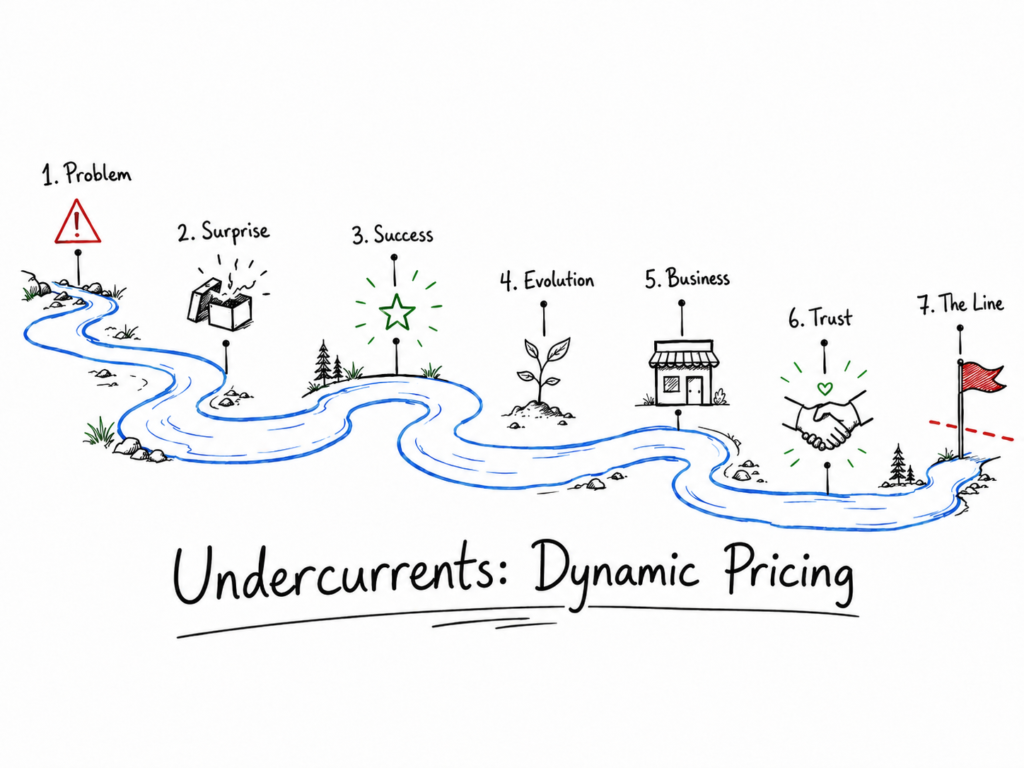
This report is organized into seven investigations:
- The Problem — Why does dynamic pricing exist?
- The Surprise — Are most operators already doing it?
- Definitions of Success — Are operators optimizing for different outcomes?
- The Evolution — Has AI changed the economics of pricing?
- The Business Case — Are there any measurable results?
- The Trust Equation — Does hospitality change anything, or everything?
- The Line — Where should the industry draw the boundary?
Each section explores the answers to this question and highlights one key insight, featuring learnings from interviews with leaders across the global industry.
Chapter 1: The Problem
Why coworking has accidentally become a yield management business.
"Dynamic pricing is a way to optimise revenue per available room per hour."
Eyal Lasker, Flexspace
Every coworking space has the same problem
Imagine two businesses.
The first sells office furniture.
If they don’t sell a desk today, they can sell it next week. The inventory waits patiently in a warehouse until the next customer arrives. Time has very little effect on its value.
Now imagine a coworking operator.
A meeting room sits empty between 10:00 and 11:00 on Tuesday morning. At 11:01, that inventory no longer exists. It can’t be boxed up and sold tomorrow. It can’t be discounted next month. It has simply disappeared.
The same is true for a hot desk that nobody booked today, a day office that sat vacant all afternoon, or an event space that never hosted an event this weekend.
Unlike traditional retail, coworking sells time.
And time is the most perishable inventory there is.
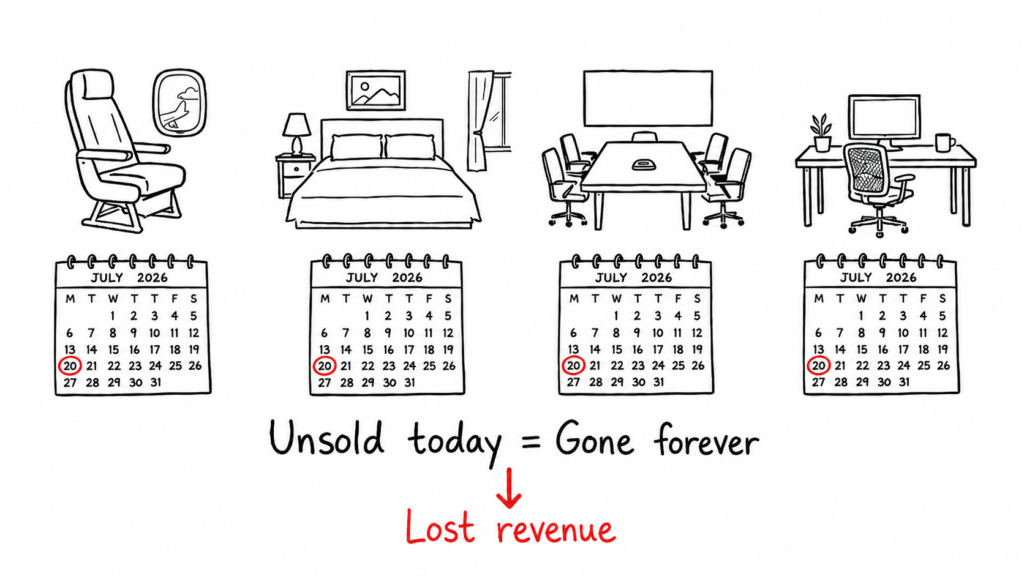
Key Insight:
Every empty bookable hour represents revenue that can never be recovered.
This isn't a coworking problem
It’s a Hospitality Problem.
One of the biggest surprises during this investigation was realizing that coworking isn’t entering completely unfamiliar territory.
It’s entering a world that airlines, hotels, cruise lines, and car rental companies have been refining for decades.
These industries all share one defining characteristic.
Their inventory expires.
An airline doesn’t simply ask:
“How much should Seat 12A cost?”
It asks:
“What’s the best price that maximizes the value of Seat 12A before departure?”
Hotels don’t set room rates once a year.
They constantly balance occupancy, demand, local events, seasonality, and booking patterns to maximize revenue across every available night.
Revenue managers have a name for this discipline.
Yield management.
At its core, yield management isn’t about charging the highest possible price.
It’s about matching price with demand to maximize the value of inventory before it disappears.
Viewed through that lens, coworking suddenly looks remarkably familiar.
Sidebar: What is Yield Management?
Yield management is the practice of adjusting pricing and inventory availability to maximize revenue from assets that expire.
Common examples include:
 Airline seats
  Hotel rooms
  Cruise cabins
  Rental cars
 Concert tickets
  Meeting rooms
  Day passes
  Event space
The principle is identical:
Once the day is over, unsold inventory is gone forever.
The Question Changes
Once you begin thinking in terms of perishable inventory, something subtle happens.
The pricing question changes. Instead of asking:
What should this meeting room cost?
Operators begin asking:
How do we maximize the value of every hour it’s available?
That sounds like a minor distinction. It isn’t.
The first question focuses on price. The second focuses on outcomes.
That’s exactly how Eyal Lasker from Flexspace AI framed dynamic pricing during our interview.
Rather than talking about algorithms, automation, or artificial intelligence, he described the objective first:
Revenue per available room per hour.
Only after defining the outcome did the technology enter the conversation.
That order matters.
Because it reminds us that software isn’t the strategy. It’s simply one possible way of achieving it.
"I want to focus on the outcome rather than the technology. Dynamic pricing is about optimizing revenue per available room per hour."
Eyal Lasker, Flexspace
The First Question Flexspace Asked
Many people assume dynamic pricing begins with sophisticated AI models.
It didn’t.
One of the earliest questions Flexspace wanted answered was a much simpler one.
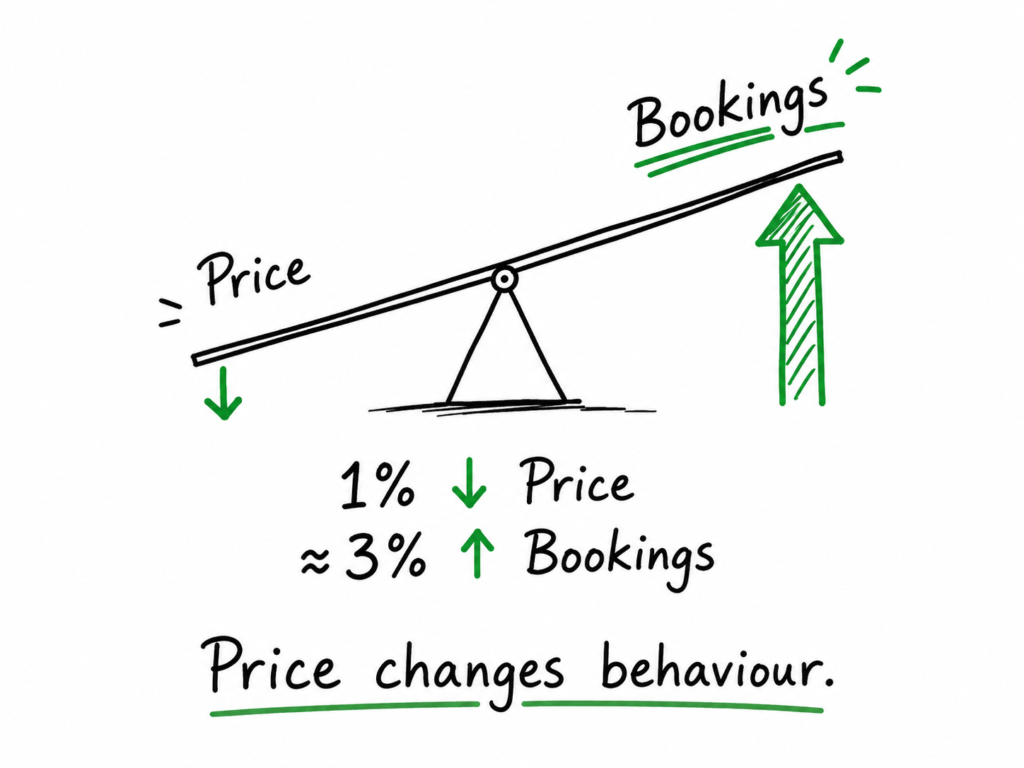
Do people actually change their behavior when prices change?
After spending more than a year testing that hypothesis across thousands of bookings, the team found something remarkably consistent.
A modest price reduction generated a disproportionately larger increase in booking volume. In other words, customers responded to price exactly as economic theory predicts.
Economists call this price elasticity.
The idea is straightforward:
Lower prices generally increase demand.
Higher prices generally reduce it.
The challenge isn’t understanding that relationship.
The challenge is understanding how much it changes for your particular business.
Dynamic Pricing Isn't About Charging More
This was probably the biggest misconception I had heard before starting this investigation.
Like many, I subconsciously associated dynamic pricing with one idea.
Higher prices. Surge pricing.
Airlines charging more because flights are almost full.
Uber multiplying fares during a rainstorm.
Hotels doubling rates during a conference.
But every expert we interviewed challenged that assumption.
Dynamic pricing isn’t designed to maximize price.
It’s designed to maximize outcomes.
Sometimes that means increasing prices. Sometimes it means lowering them.
A lower meeting room price on Friday afternoon might generate revenue that would otherwise never have existed. A higher price on Tuesday morning might protect availability for members while still filling the room.
Both decisions are forms of optimization. Neither is inherently about charging more.
From Pricing to Behavior
This is where the conversations began to evolve beyond economics.
If changing prices changes behavior, then pricing isn’t simply a commercial tool.
It’s an operational one.
It can encourage members to book quieter periods. Reduces congestion during peak demand. Spreads utilization more evenly across the week. Protects premium inventory for higher-value bookings. Or creates entirely new demand that otherwise wouldn’t exist.
Pricing, in other words, becomes a way of shaping how a workspace operates and not just how much money it earns.
That realization became the thread running through every interview that followed.
What we learned:
Dynamic pricing isn’t about charging more.
It’s about maximizing the value of perishable inventory.
Questions for Operators
Before thinking about software, ask yourself:
- Which parts of my business contain perishable inventory?
- Where do I regularly experience excess demand?
- Where do I regularly experience unused capacity?
- Are my current prices shaping behavior, or simply reacting to it?
- If I never changed another price again, how much revenue would disappear with unsold inventory?
At this point, I thought I understood dynamic pricing.
Operators adjusted prices. Technology simply made it faster. Simple.
Then I started asking a deceptively straightforward question:
“Do you use dynamic pricing?”
Almost everyone answered:
“Not really…” or “Kinda…”
And then proceeded to describe exactly how they were already doing it.
Chapter 2: The Surprise
We've Been Doing This All Along
"We're really using dynamic pricing with our offices as well. We just call it something different."
Bryce Hill, Denver Coworking
The Question That Changed the Investigations
When we began interviewing operators for this report, one of the first questions we asked seemed simple enough.
“Do you use dynamic pricing?”
I expected fairly straightforward answers.
“Yes.” “No.” “We’re experimenting.”
“We’re waiting to see how the technology evolves.”
Instead, something much more interesting happened.
Several operators began answering with:
“Not really…”
And then spent the next few minutes describing pricing decisions based on demand, occupancy, lease terms, customer behavior, and market conditions.
Without realizing it… they were describing dynamic pricing.
That was the moment this investigation changed direction.
Perhaps coworking wasn’t beginning to adopt dynamic pricing after all.
Perhaps it had been using it for years. It just hadn’t been calling it that.
Key Insight:
The industry has been practicing dynamic pricing for decades.
AI didn’t introduce the concept; it simply expanded it.
Dynamic Pricing Doesn't Have to Be Dynamic
One of the reasons this topic creates so much confusion is because the phrase dynamic pricing sounds highly technical.
It conjures images of algorithms adjusting prices every few seconds using artificial intelligence and real-time demand data.
Sometimes that’s true. More often, it isn’t.
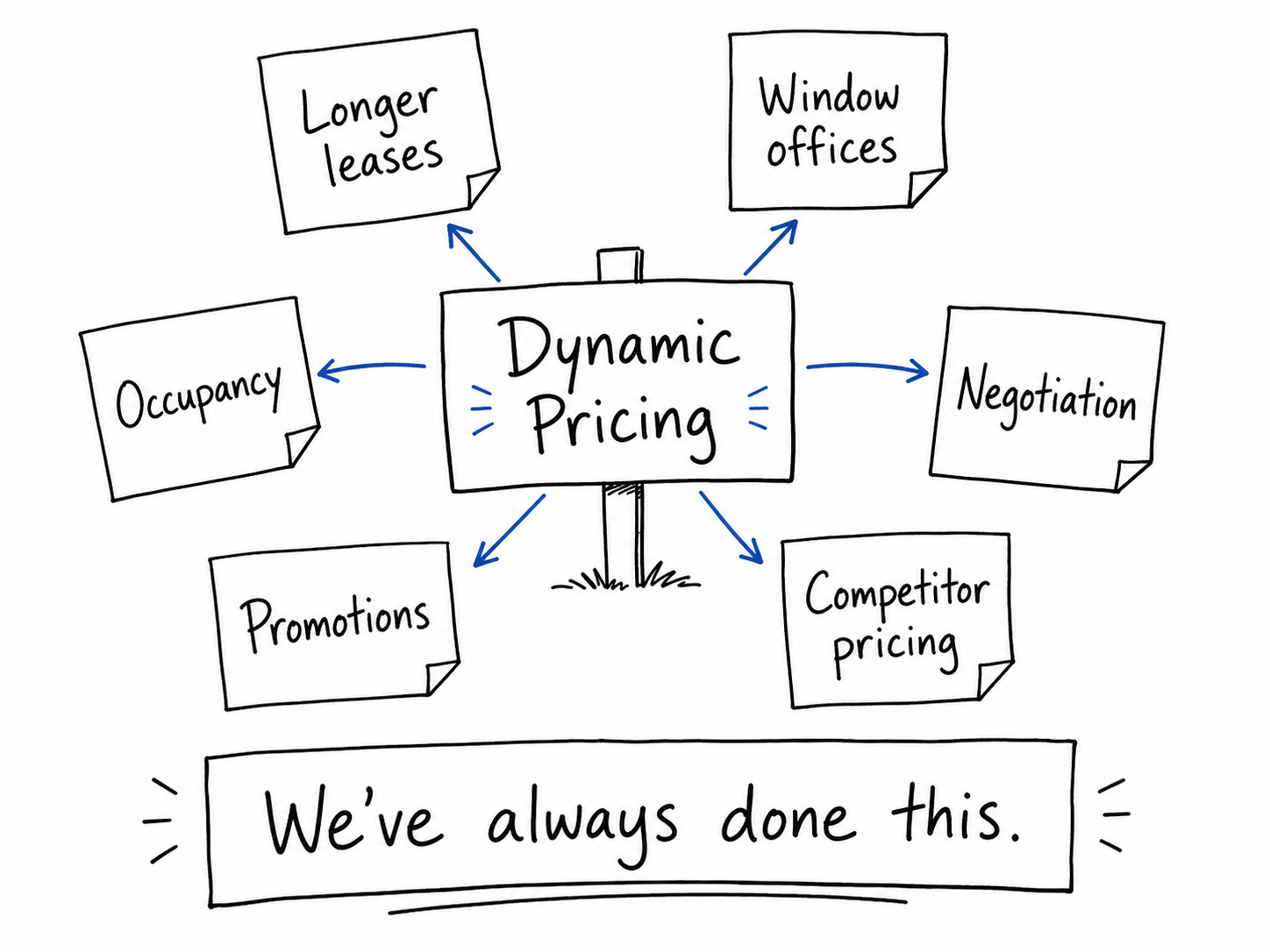
Every time an operator offers a discount for a twelve-month commitment instead of a rolling agreement, they’re changing price based on changing conditions.
Every time a corner office commands a premium over an internal office, they’re recognizing differences in demand.
Every time meeting room rates increase during peak periods, or promotions are introduced to stimulate quieter days, pricing responds to supply and demand.
Those decisions may happen manually. They may happen once a quarter.
They may happen instinctively rather than algorithmically.
But they’re still forms of dynamic pricing.
The difference is one of sophistication, not philosophy.
Pricing Has Always Been About Context
Consider how most coworking operators already price their products today.
Private offices vary according to:
- Size
- Natural light
- Views
- Floor
- Furniture
- Availability
Meeting rooms vary according to:
- Capacity
- Equipment
- Time of day
- Booking duration
Memberships vary according to:
- Commitment length
- Team size
- Included services
- Market conditions
None of those prices are truly fixed. They’re contextual.
The value of an office overlooking the city isn’t identical to one beside the server room.
A meeting room on Tuesday morning doesn’t necessarily carry the same commercial value as one on Friday afternoon.
Operators have always understood this intuitively.
What’s changing is that software can now evaluate hundreds of contextual signals simultaneously, rather than relying on occasional manual adjustments.
Sidebar: Static Pricing Doesn't Really Exist
Many operators describe themselves as having fixed pricing.
In reality, most businesses already maintain dozens (or even hundreds) of different prices.
Examples include:
- Early bird promotions
- Longer lease discounts
- Premium office upgrades
- Seasonal offers
- Team pricing
- Referral incentives
- Corporate agreements
- Occupancy-driven negotiations
Even when prices remain stable for weeks or months, they are still responding to context.
The question isn’t whether pricing changes. It’s how frequently and why.
Negotiation Is Dynamic Pricing
One observation kept surfacing throughout the interviews.
Coworking operators negotiate every day.
If occupancy is low, they may offer additional flexibility.
If premium inventory is scarce, discounts become harder to justify.
If a large team is considering a long-term commitment, pricing often reflects the strategic value of that customer.
None of those conversations follow a rigid price list.
They’re influenced by the same factors that increasingly feed modern pricing engines:
- Supply
- Demand
- Availability
- Timing
- Customer value
- Opportunity cost
Human judgement has always been dynamic.
Artificial intelligence simply allows more of those judgements to happen consistently and at scale.
So Why Does It Feel New?
If coworking has been practicing dynamic pricing all along, why has the topic suddenly become so prominent?
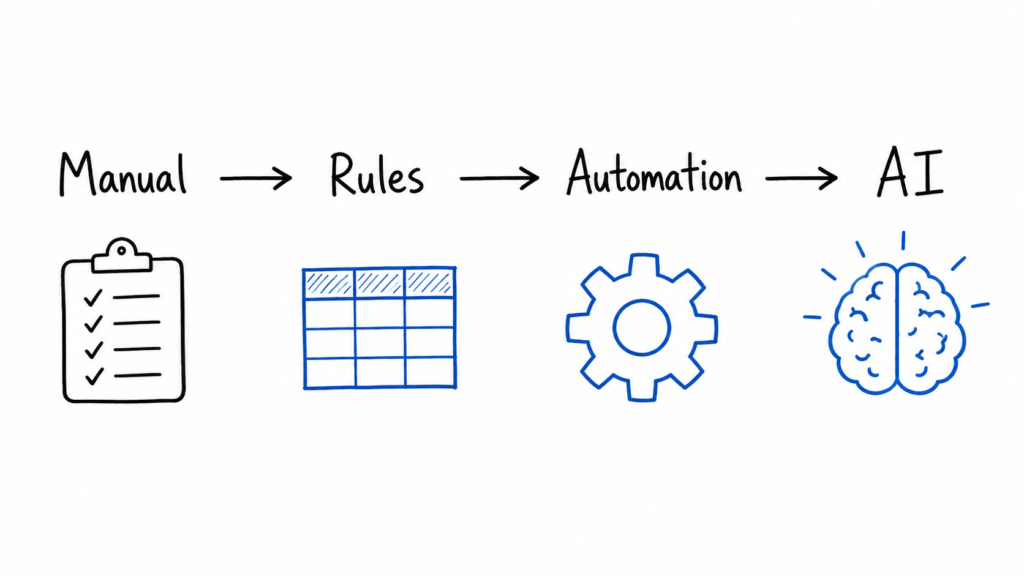
Because technology has changed what is practical.
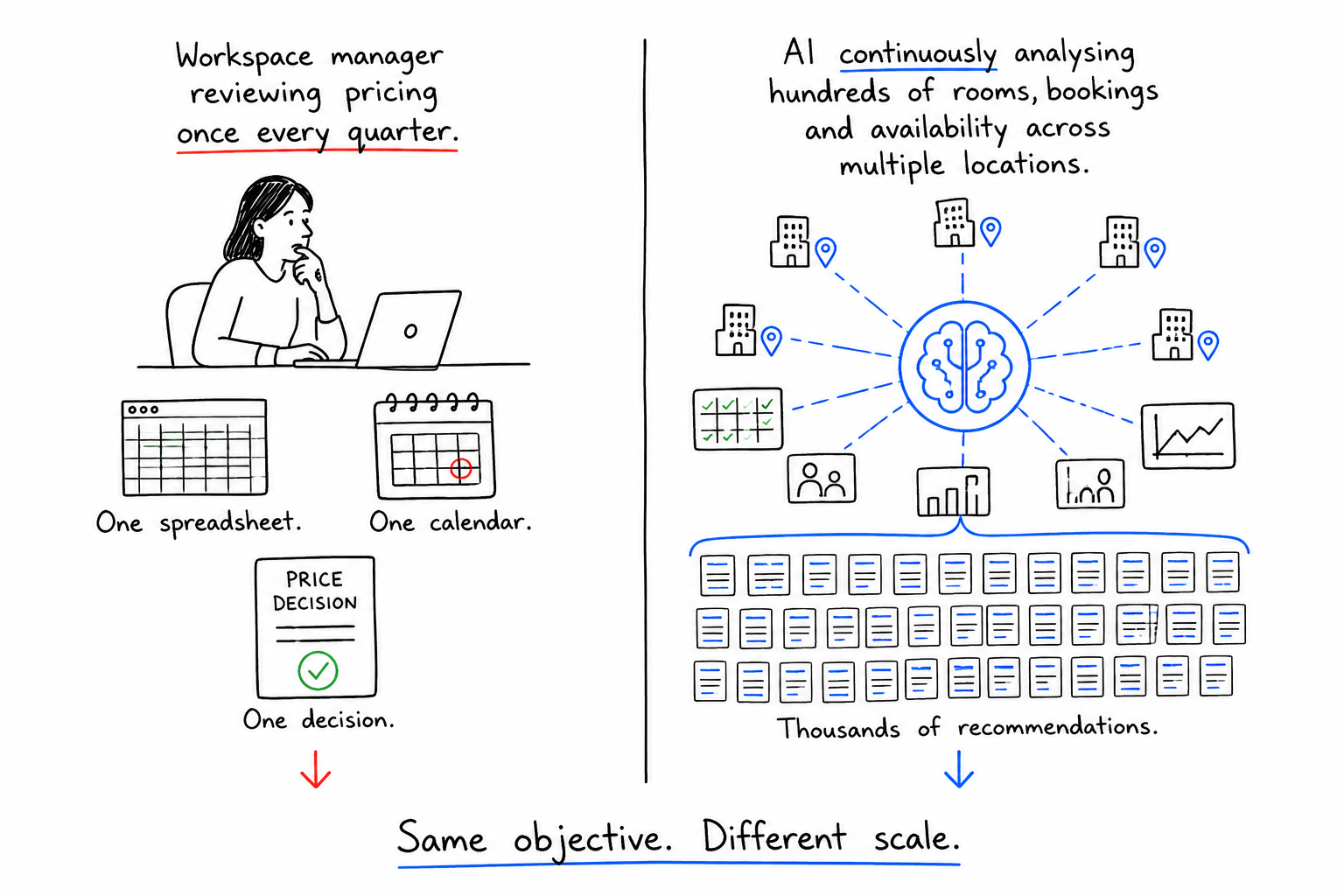
Historically, operators might review prices every quarter.
Or whenever occupancy changed significantly.
Or when a competitor announced new rates.
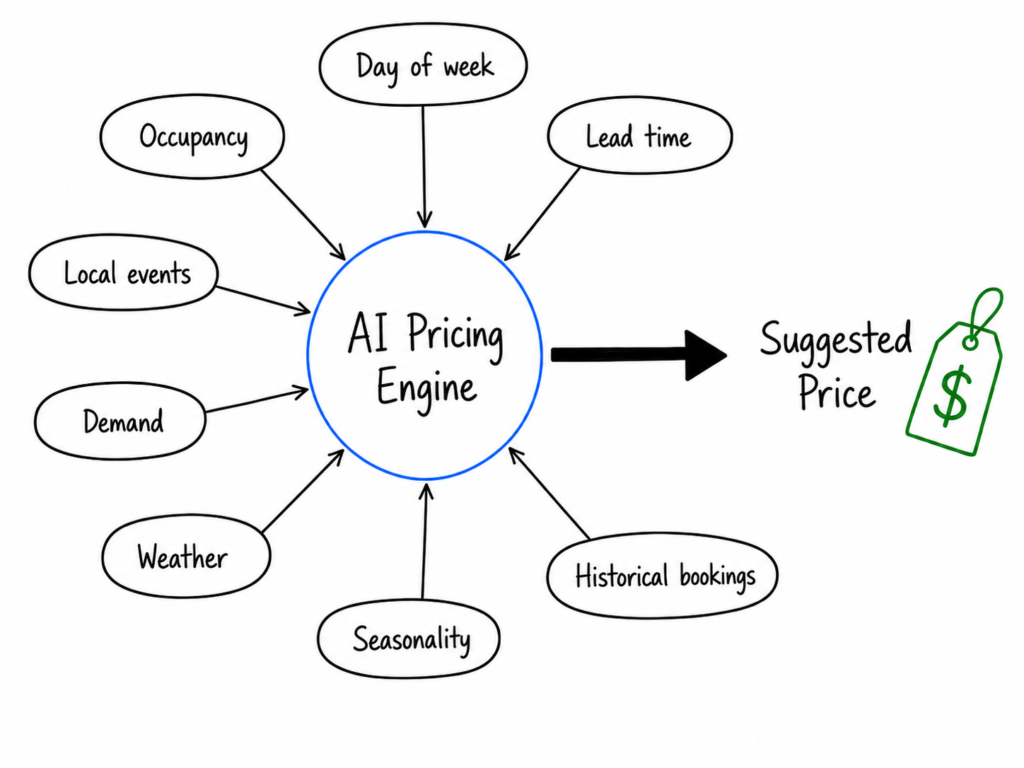
Today’s pricing engines can evaluate availability, booking patterns, lead times, historical demand, local events, and dozens of other variables continuously.
The principle hasn’t changed. The frequency has.
And that changes the conversation dramatically.
Instead of asking:
“Should we review our pricing next month?”
Operators can now ask:
“What should this room cost right now?”
That’s a monumental operational shift.
The Real Shift
Before this investigation, I thought dynamic pricing was the story.
By the end of these interviews, I realized it wasn’t.
The real story is decision-making.
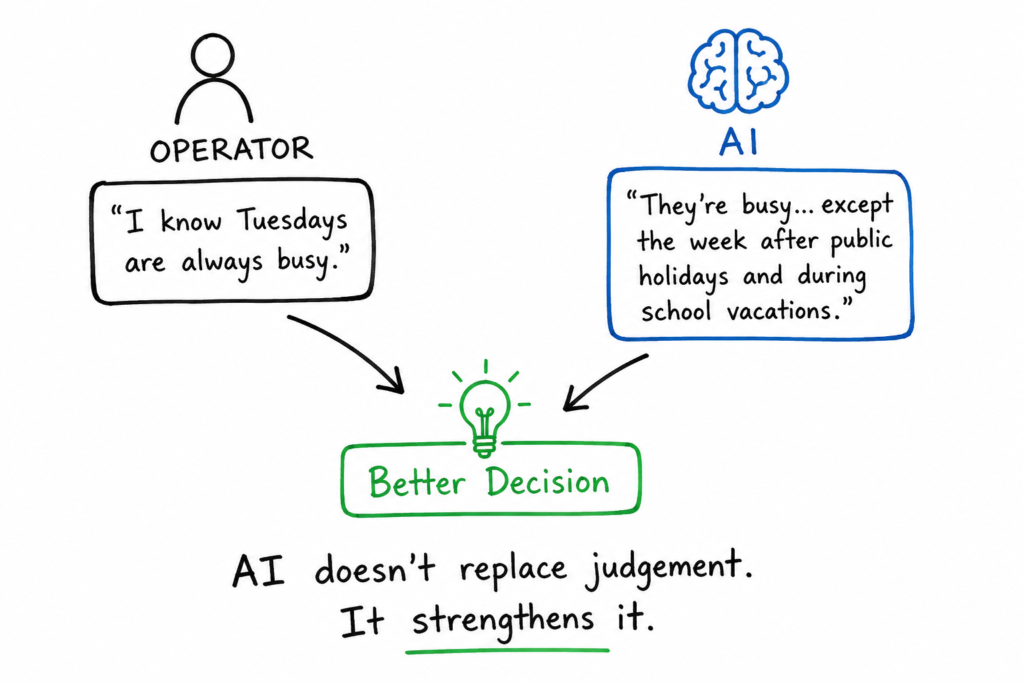
For decades, operators have relied on experience, instinct, and periodic reviews to balance occupancy with revenue.
Technology isn’t replacing that judgement.
It’s augmenting it.
Instead of making ten pricing decisions each quarter, operators may soon be making thousands every day. That doesn’t necessarily mean prices become unpredictable.
It means they’re becoming increasingly informed.
What we learned:
Most coworking operators already use dynamic pricing.
They simply don’t call it that.
Questions for Operators
Ask yourself:
- Which pricing decisions do we already make manually?
- How often do we review those decisions?
- Which decisions rely on instinct rather than evidence?
- Where could technology improve consistency without removing human judgement?
- If we already negotiate pricing, what makes algorithmic recommendations fundamentally different?
Once it became clear that almost everyone was already practicing some form of dynamic pricing, another question emerged.
If operators are using the same tool, why are they trying to achieve such different outcomes?
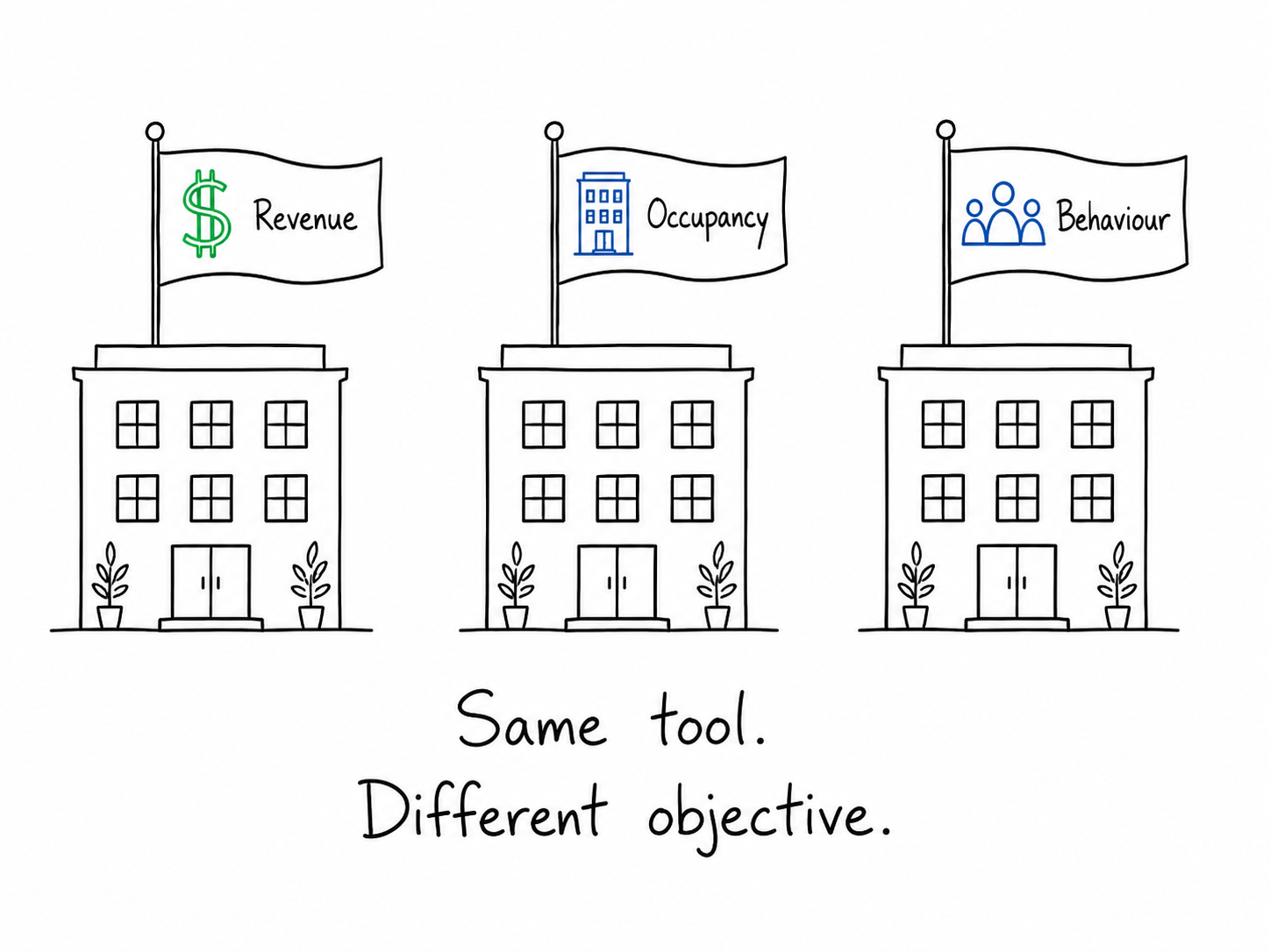
Some wanted higher revenue. Others wanted fuller buildings.
Others weren’t trying to maximize either; they were trying to change behavior.
Chapter 3: Definitions of Success
What Are We Actually Trying to Optimize?
"The goal isn't necessarily to maximize price. The goal is to achieve the outcome you're looking for."
Hector Kolonas, Syncaroo.com
Everyone Wanted Different Things
By this point in the investigation, one assumption had already been overturned.
Most coworking operators were already practicing some form of dynamic pricing.
The next surprise was even bigger.
Almost nobody agreed on what success looked like.
When people talk about dynamic pricing, it’s easy to assume everyone is trying to answer the same question.
“How can I make more money?”
The interviews told a different story.
Key Insight:
Dynamic pricing isn’t the strategy.
It’s the tool.
Your strategy determines how you use it.
Revenue Isn't Always the Goal
When most people hear the phrase dynamic pricing, they instinctively think about charging more.
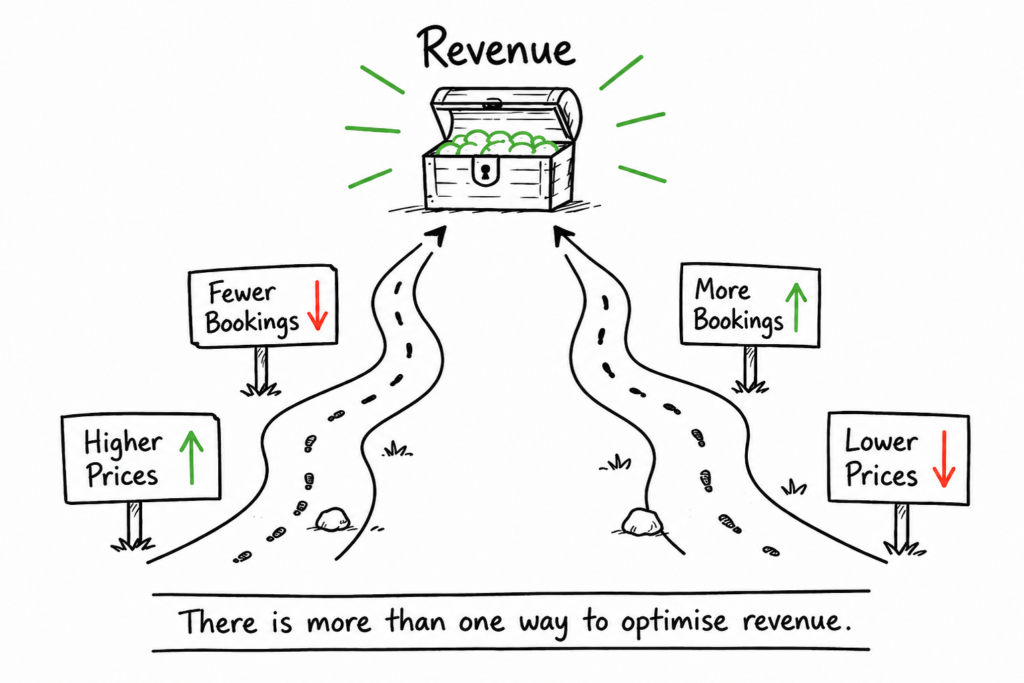
But maximizing revenue doesn’t necessarily mean maximizing price.
Imagine a meeting room that sits empty every Friday afternoon.
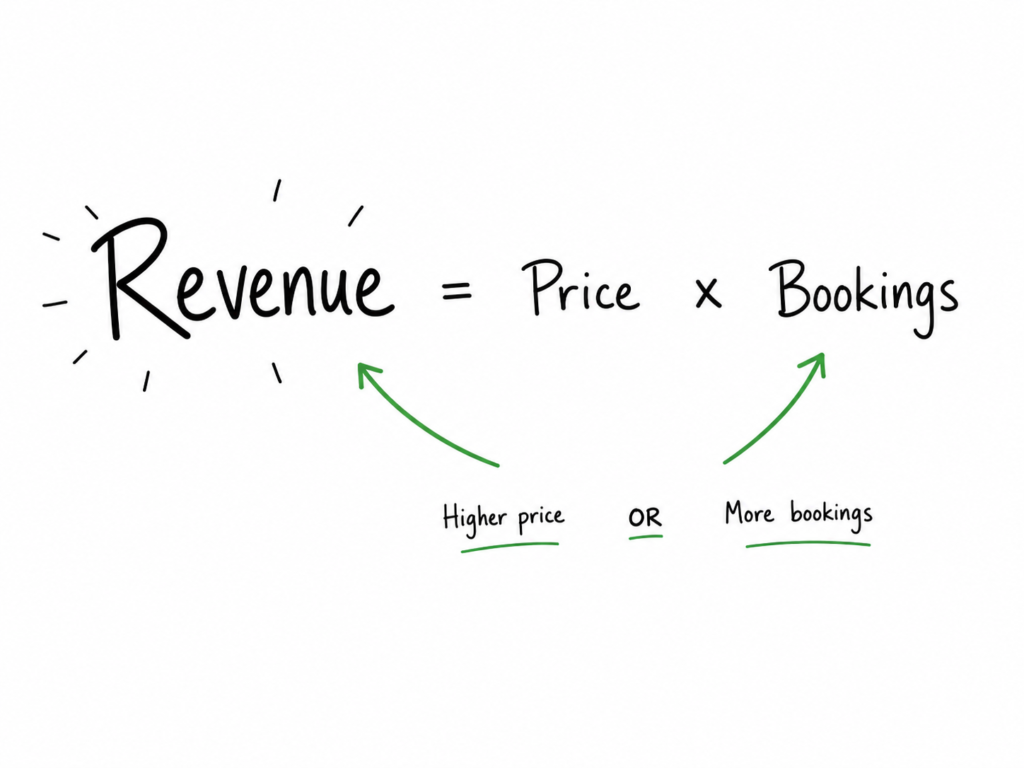
Reducing the hourly rate by 15% might feel like earning less. But if that discount turns an empty room into a booked room, total revenue increases.
The room wasn’t generating any income before. Now it is.
This is one of the biggest mental shifts operators need to make.
Pricing isn’t simply about extracting more value from every booking. Sometimes it’s about creating bookings that wouldn’t have happened at all.
"Revenue is a combination of price and volume. Sometimes lowering the price produces a better commercial outcome."
Eyal Lasker, Flexspace AI
Occupancy Tells a Different Story
Not every operator begins with revenue.
For some, the bigger challenge is utilization.
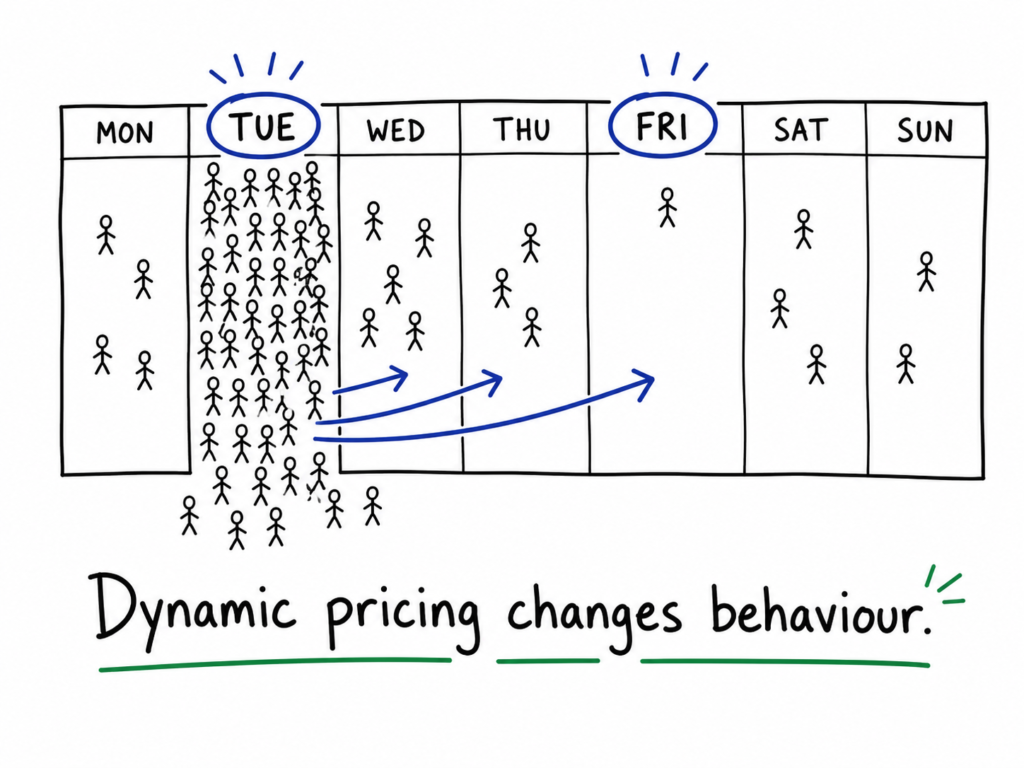
A building that’s full on Tuesdays but half-empty on Fridays isn’t operating efficiently.
The objective is to smooth demand across the week.
Pricing becomes one way of encouraging members to shift their behavior.
Rather than asking:
“How can we charge more?”
The question becomes:
“How can we encourage people to use quieter periods?”
A small discount on Friday afternoon might not increase the average booking value.
But it could increase total utilization.
That has implications beyond revenue. A busier building creates more opportunities for community, networking, and ancillary spending.
Occupancy itself becomes the strategic objective.
Sometimes the Goal Is Protection
One of the more interesting perspectives came from operators using dynamic pricing defensively rather than aggressively.
Instead of asking how they could increase prices, they focused on protecting premium inventory.
A highly desirable meeting room during peak demand has strategic value.
Discounting it unnecessarily doesn’t just reduce revenue. It reduces availability for customers who genuinely value it.
Dynamic pricing allows operators to preserve scarce inventory while remaining more flexible when demand is lower.
In that sense, pricing becomes an inventory management tool rather than simply a revenue management tool.
"We're protecting our premium inventory while using pricing to maximize everything else."
Gregg Jackowitz, Bond Collective
Behavior Might Be the Most Interesting Objective
Perhaps the most fascinating insight from the interviews was that pricing can influence behavior.
Think about your own habits.
You’ve probably booked flights on different days because they were cheaper. Chosen a hotel outside peak season. Or maybe attended a matinee because tickets cost less.
Pricing doesn’t simply respond to behavior. It shapes it.
Coworking operators are beginning to explore exactly the same principle.
Could pricing encourage members to book quieter meeting rooms?
Could it reduce congestion during peak hours?
Could it spread demand more evenly throughout the week?
Those questions have very little to do with charging more.
They have everything to do with running a better workspace and business.
Sidebar: Pricing as Behavior Design
Dynamic pricing isn’t only a commercial tool.
It can also influence:
- Meeting room utilization
- Peak-time congestion
- Member booking habits
- Workspace flow
- Availability of premium inventory
In many cases, changing behavior creates more value than changing price.
There Isn't One Definition of Success
This was one of the most important lessons from the entire investigation.
Too often, discussions about dynamic pricing begin with software.
Algorithms. Artificial intelligence. Automation.
In reality, those conversations should begin somewhere else.
They should begin with strategy.
Before evaluating pricing engines, operators need to answer a much simpler question.
What problem are we trying to solve?
Because without a clear objective, the smartest pricing engine in the world won’t know what success looks like.
What we learned:
Dynamic pricing isn’t the strategy.
It’s the tool.
Your objective determines how you use it.
Questions for Operators
Before thinking about technology, ask yourself:
- Are we trying to maximize revenue or utilization?
- Are we trying to influence customer behavior?
- Which inventory is genuinely scarce?
- Which inventory regularly goes unused?
- How would we define success twelve months from now?
If your leadership team can’t answer those questions consistently, you’re probably not ready to automate pricing decisions yet.
Once it became clear that operators were pursuing very different objectives, another question naturally followed.
If the principles of dynamic pricing have existed for years, why is everyone talking about it now?
The answer has less to do with pricing and everything to do with artificial intelligence.
Chapter 4: The Evolution
If Dynamic Pricing Isn't New...
Why Is Everyone Talking About It Now?
"AI didn't invent dynamic pricing. It simply made better pricing decisions possible at a scale humans never could."
Hector Kolonas, Syncaroo.com
Pricing Was Never Limited by Economics
It Was Limited by Bandwidth.
For decades, coworking operators have understood the same basic principles we’ve explored throughout this report.
Supply matters. Demand matters. Availability matters. Customer behavior matters.
None of those ideas are new. What has changed isn’t the theory. It’s the number of decisions businesses can realistically make.
Historically, pricing reviews happened every few months. Perhaps after occupancy changed significantly. Maybe after a competitor adjusted their rates. Sometimes after management simply had enough time to revisit pricing.
The limitation wasn’t knowledge. It was bandwidth.
No operations team has the time to continuously evaluate hundreds of meeting rooms, offices, memberships, and booking patterns across every hour of every day.
That’s the problem modern pricing engines solve.
Not because they understand pricing better than experienced operators, but because they never stop paying attention.
Key Insight:
The biggest innovation isn’t AI.
It’s the ability to make thousands of informed pricing decisions instead of dozens.
From Periodic Reviews to Continuous Decisions
Think about how pricing typically works today.
An operator notices meeting rooms are fully booked every Tuesday morning.
A discussion takes place. Rates are reviewed. Changes are made.
The process repeats several months later.
Nothing about that process is wrong.
It’s simply constrained by time.
Modern pricing engines compress that entire workflow into something much smaller.
Every booking becomes another data point. Every cancellation adds context. Every change in occupancy slightly improves future recommendations.
Instead of waiting for quarterly reviews, pricing decisions become continuous.
Not because prices necessarily change every day, but because the information behind those prices never stops evolving.
That’s another profound operational shift.
AI Doesn't Replace Experience
One misconception surfaced repeatedly during our interviews.
People often imagine AI replacing human judgement.
In reality, it does something much less dramatic. It expands the amount of information available before judgement is applied.
An experienced operator might naturally consider:
- Occupancy
- Day of week
- Upcoming events
- Seasonal demand
- Historical bookings
- Competitor activity
Artificial intelligence simply considers all of those variables…
simultaneously…
for every room…
every hour…
across every location.
The recommendation still needs context. But the analysis happens instantly, and continuously.
Every Workspace Behaves Differently
Another important lesson from the interviews is that pricing engines aren’t trying to learn coworking.
They’re trying to learn your coworking business.
Every workspace has its own rhythms.
Some are busiest on Mondays. Others peak midweek. Some attract freelancers. Others serve enterprise teams. Some experience strong seasonality. Others remain remarkably consistent throughout the year.
The objective isn’t to apply a universal pricing formula.
It’s to understand how customers behave within one specific building.
The better the system understands those behaviors, the better its recommendations become.
"The AI isn't learning coworking. It's learning your business."
Hector Kolonas, Syncaroo.com
Better Decisions, Together
Perhaps the biggest misconception surrounding AI is that operators hand pricing over to an algorithm and walk away.
That isn’t what most of today’s platforms are building.
The strongest implementations combine two different strengths.
Operators provide experience.
AI provides pattern recognition.
Together they produce better decisions than either could alone.
Technology Changes Expectations
As pricing engines become more sophisticated, something else begins to change.
Expectations.
Operators no longer ask:
“Can software help us review pricing?”
Increasingly, they ask:
“Why aren’t we making better use of the information we already have?”
That’s an important distinction.
Competitive advantage is shifting away from collecting data, toward acting on it.
The winners won’t necessarily be the companies with the most information.
They’ll be the ones making the best decisions with it.
What we learned:
AI didn’t invent dynamic pricing.
It made better pricing decisions scalable
Questions for Operators
Before evaluating pricing software, ask yourself:
- Which pricing decisions do we currently make manually?
- How often do we revisit those decisions?
- What data are we already collecting but rarely using?
- Where would more frequent decision-making improve commercial performance?
- Do we want AI making decisions, or simply recommending them?
Those answers will often determine the right technology long before vendors enter the conversation.
Technology explains how pricing decisions are becoming more sophisticated.
But operators don’t invest in technology because it’s clever. They invest because they expect results.
So the next question is the one every operator eventually asks:
Does dynamic pricing actually work?
Chapter 5: The Business Case
Does Dynamic Pricing Actually Work?
"Dynamic pricing isn't one big decision. It's thousands of tiny optimizations that compound over time."
Eyal Lasker, Flexspace AI
Eventually, Every Conversation Ends Here
Throughout this report, we’ve explored why dynamic pricing exists, why coworking has been practicing versions of it for years, and how technology is making pricing decisions more sophisticated.
But eventually every operator asks exactly the same question: Does it actually work?
It’s a reasonable challenge.
Introducing new software, changing pricing processes, and asking teams to think differently all create additional complexity.
If the commercial gains are marginal, the business case quickly falls apart.
So we asked every operator and every vendor the same question:
What measurable results have you actually seen?
The answers weren’t identical. But they pointed in the same direction.
Key Insight:
Dynamic pricing doesn’t create value through one dramatic decision.
It creates value through hundreds of better decisions.
Finding #1: Better Pricing Doesn't Always Mean Higher Pricing
As mentioned, the biggest misconception surrounding dynamic pricing is that success comes from charging more. But that isn’t what we found.
Again and again, interviewees described success as finding a better balance between price and demand.
Sometimes that meant charging more. Sometimes less.
Sometimes it meant leaving prices unchanged.
The objective wasn’t to maximize price.
The objective was to maximize the commercial performance of each piece of inventory.
A meeting room earning $80 for an hour it would otherwise have sat empty is commercially more valuable than a meeting room listed at $100 that nobody books.
That distinction appears obvious once stated.
Yet it fundamentally changes how operators think about pricing.
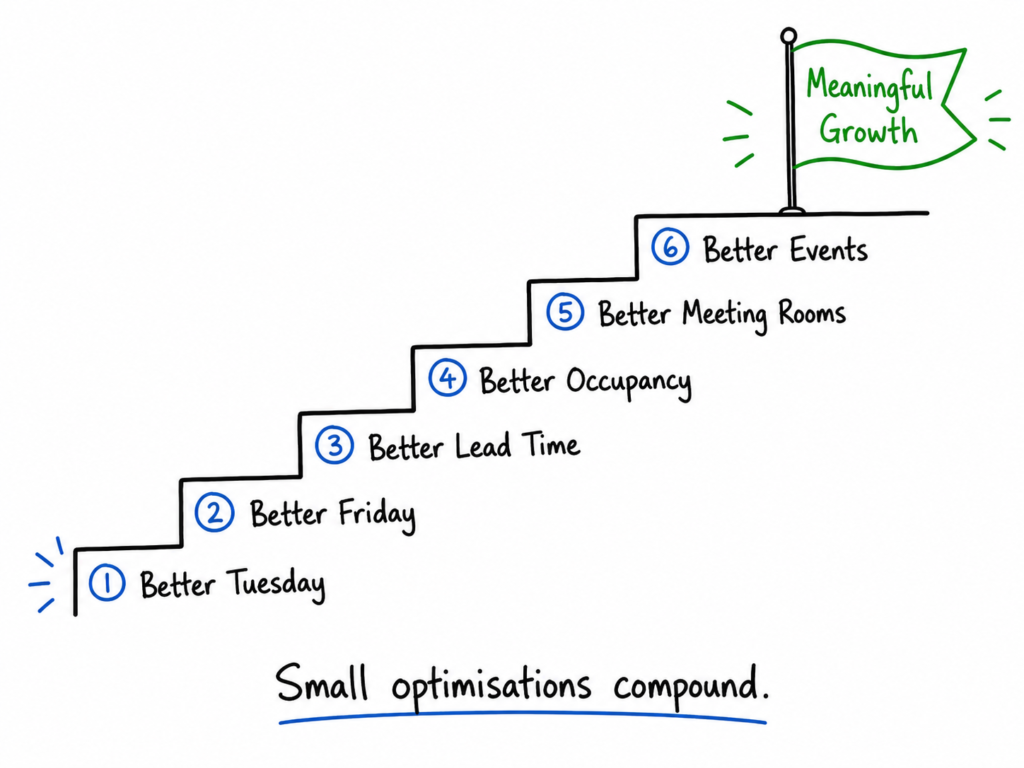
Finding #2: Small Improvements Compound
One phrase kept appearing throughout our interviews.
Thousands of small optimizations.
That idea deserves far more attention than any headline percentage.
Think about a typical coworking operation.
Improving Tuesday utilization by two percent won’t transform the business.
Neither will increasing average lead time.
Or slightly improving premium room occupancy.
Or converting a handful of previously empty Friday bookings.
Individually, those improvements barely register.
Collectively, they reshape the economics of the building.
Dynamic pricing isn’t searching for one breakthrough. It’s searching for hundreds of tiny advantages.
Finding #3: Operators Are Seeing Measurable Results
The individual case studies varied. The pattern did not.
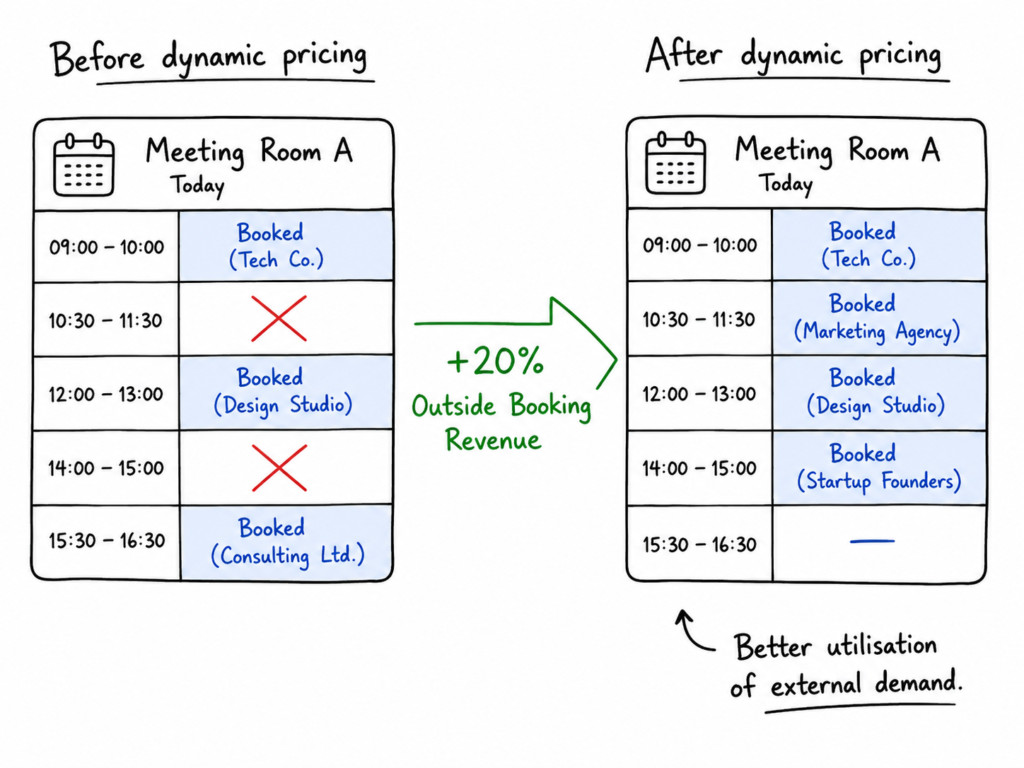
Bond Collective reported approximately 20% growth in revenue from external meeting room bookings after introducing dynamic pricing.
Rather than focusing exclusively on charging more, pricing became more closely aligned with actual demand throughout the booking cycle.
Meeting slots that had previously generated no revenue at all began producing income.
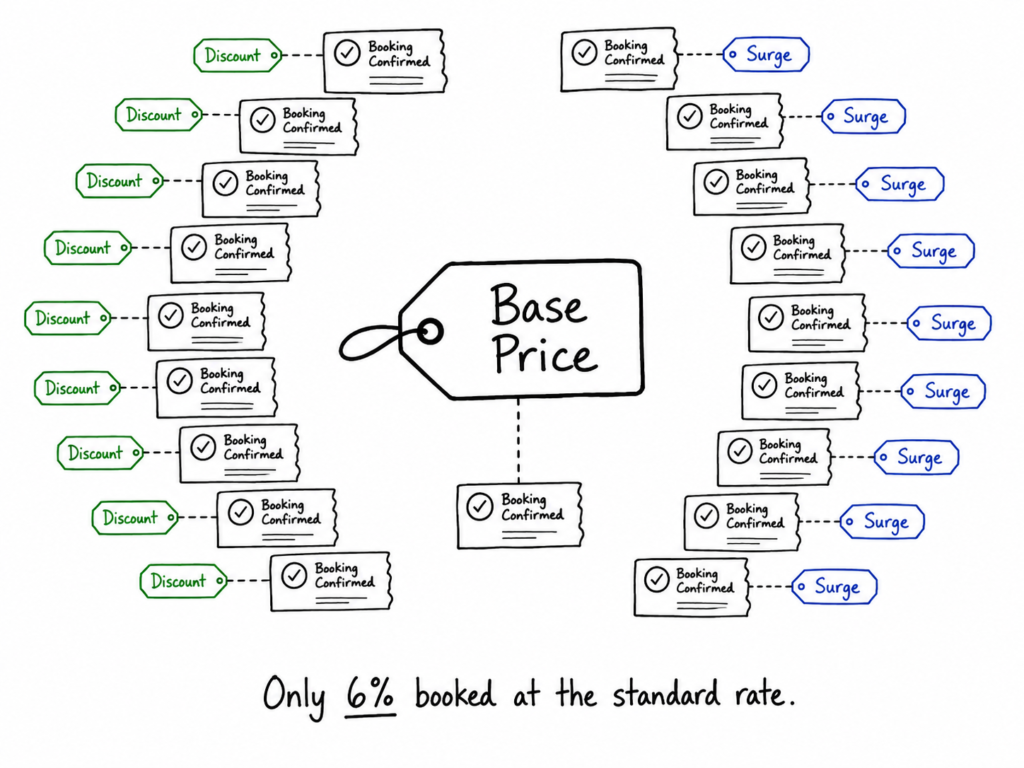
Sarah Sich shared perhaps the most surprising statistic from the entire investigation.
Only 6% of bookings actually occurred at their chosen base rate.
Almost every booking happened above or below that anchor price, depending on context.
The list price had become exactly that: An anchor.
Not the most common transaction price.
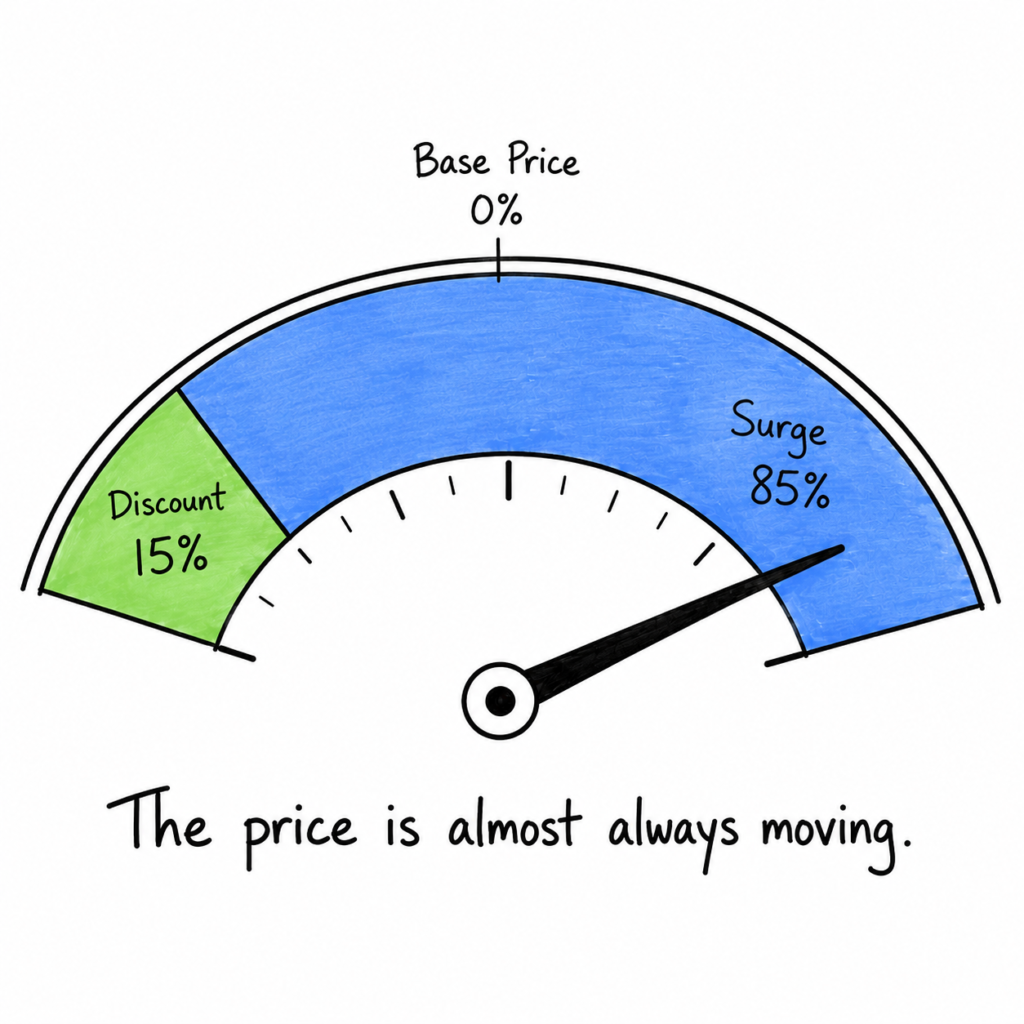
Bryce Hill‘s experience reinforced the same conclusion.
Across their booking data, pricing was almost never static.
Approximately 85% of bookings occurred above the standard rate.
Around 15% received discounted pricing.
Virtually zero bookings were made at the default base price.
Again, the interesting story wasn’t that prices increased.
It was that pricing continuously responded to changing conditions.
Finding #4: Dynamic Pricing Doesn't Work Everywhere
One of the strengths of these interviews was that they weren’t universally positive.
Several participants spoke openly about operators who had experimented with dynamic pricing and ultimately returned to more traditional pricing structures.
Sometimes the commercial benefit wasn’t compelling enough.
Sometimes operational complexity outweighed the gains.
Sometimes protecting a predictable member experience mattered more than optimizing every booking.
That honesty is important.
Because it reminds us that dynamic pricing isn’t a destination.
It’s one possible operating model.
"Some operators tried it... but ultimately decided consistent pricing was still the better fit."
Jana Greer, Colliding Clouds
The Results Raise A Different Question
By the end of the interviews, I wasn’t questioning whether dynamic pricing could improve commercial performance.
The evidence suggested that, under the right conditions, it often could.
Instead, another question kept surfacing.
If the business case is becoming increasingly compelling, why isn’t everyone embracing it?
The answer has very little to do with revenue. It has everything to do with trust.
What we learned:
The commercial case is becoming increasingly compelling.
The bigger challenge isn’t proving dynamic pricing works.
It’s deciding where it belongs.
Questions for Operators
Before implementing dynamic pricing, ask yourself:
- Which improvements would actually matter to our business?
- Are we chasing one big result or hundreds of small ones?
- Which inventory consistently goes unsold?
- Which metrics define success for us?
- If commercial performance improved but member trust declined, would we still consider the initiative successful?
The numbers tell one story. People tell another.
Coworking isn’t simply a revenue optimization business. It’s a hospitality business.
And hospitality introduces a constraint that spreadsheets can never fully measure.
Chapter 6: The Trust Equation
If The Business Case Is So Strong...
What's Holding Everyone Back?
“In a lot of coworking spaces, the human touch is the special sauce.”
Bryce Hill, Denver Coworking
This Is Where The Conversation Changes
Up until now, this report has largely been about economics.
Supply. Demand. Occupancy. Revenue. Optimization.
But coworking isn’t simply an inventory business.
It’s a relationship business.
Members don’t simply rent desks. They build routines. They recommend spaces to friends. They trust operators with their teams, their meetings and, in many cases, the day-to-day rhythm of their working lives.
That changes the conversation.
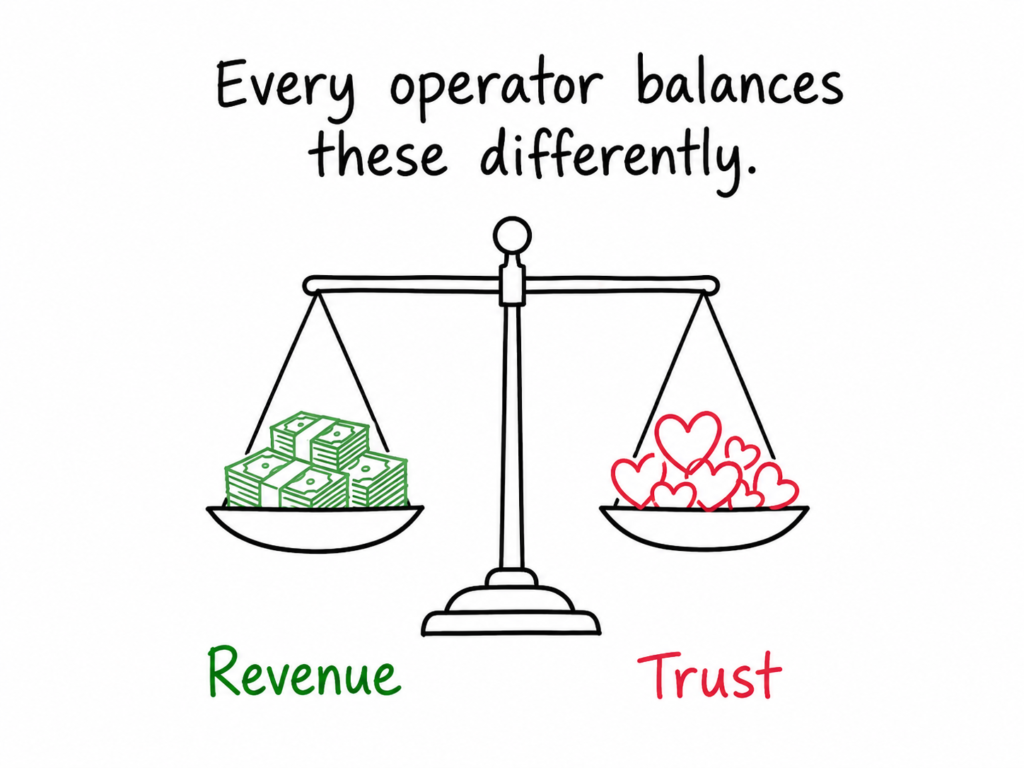
Because while algorithms optimize revenue, relationships depend on predictability.
Key Insight:
The biggest challenge isn’t technology.
It’s trust.
Hospitality Runs On Consistency
Imagine arriving at your favorite coffee shop.
You order the same latte with oat milk every morning.
Monday it’s $4.50.
Tuesday it’s $5.25.
Wednesday it’s $4.10.
Thursday it’s $6.00 because the café is busy.
Technically, every one of those prices might maximize revenue.
Emotionally, something feels wrong.
Not because the pricing model is irrational. Because consistency has value too.
Hospitality businesses don’t simply sell products. They sell confidence.
Customers like knowing what to expect.
Coworking is no different.
“They (operators) want consistency for their members, and they don’t want their members to feel like they’re being nickel-and-dimed.”
Jana Greer, Colliding Clouds
Transparency Matters More Than Technology
One of the strongest themes running throughout the interviews wasn’t about algorithms.
It was about communication.
Operators weren’t particularly worried about changing prices. They were worried about surprising members.
Airlines have spent decades teaching travelers that prices fluctuate. Hotels have done the same. Coworking has not.
Members often expect pricing to feel stable. Predictable. Fair.
If operators decide to rapidly deploy dynamic pricing, expectation management becomes just as important as the pricing model itself.
Transparency doesn’t eliminate difficult conversations. But it makes those conversations easier.
“You have to balance transparency with the optimization of pricing, which can cause some frustration.”
Sarah Sich, work.life
Sidebar: Dynamic Pricing Doesn't Have To Be Hidden
Many operators already communicate pricing differences openly.
Examples include:
- Peak and off-peak meeting room rates
- Early booking discounts
- Member versus visitor pricing
- Seasonal promotions
- Longer commitment discounts
Dynamic pricing doesn’t automatically require secrecy.
In many cases, the rules can be communicated clearly.
Protecting Members
Several operators described an approach that I found particularly interesting.
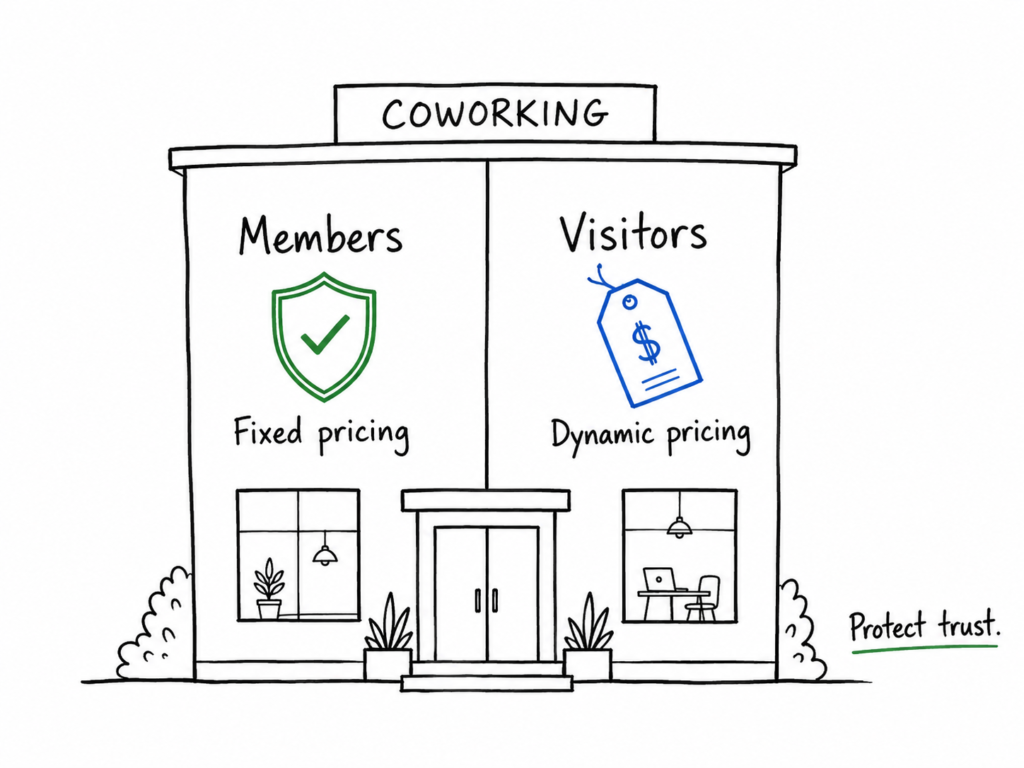
Rather than applying dynamic pricing to everyone, they used it selectively.
Members continued receiving predictable pricing. Visitors experienced greater flexibility.
This creates a useful separation.
The operator protects the trust they’ve built with their community while still optimizing inventory that would otherwise remain unsold.
Rather than asking:
Should everything become dynamic?
The better question becomes:
Which relationships deserve stability?
Lessons From Wendy's
Recently, fast-food chain Wendy’s found itself at the center of a global conversation about dynamic pricing.
Media reports suggested the company was preparing to introduce surge pricing.
Customers reacted immediately. The backlash was swift.
The criticism wasn’t really about technology. It was about fairness.
Wendy’s later clarified that it wasn’t planning to implement Uber-style surge pricing for its burgers. Instead, it was exploring digital menu boards capable of changing promotions throughout the day.
By then, however, the damage had largely been done.
The public had already interpreted “dynamic pricing” as “charging customers more.”
The episode serves as a useful reminder:
Perception often matters as much as implementation.
Sidebar: Why Wendy's Matters
The Wendy’s story wasn’t about burgers. It was about expectations.
Customers accepted dynamic pricing from airlines. They expected it from hotels.
They rejected it from a fast-food restaurant because it conflicted with what they believed the experience should feel like.
Coworking operators should ask themselves the same question.
What do members expect from us?
Trust Compounds Too
Earlier in this report, we discussed how small pricing improvements compound over time. Trust works the same way.
Every fair interaction strengthens it. Every confusing interaction weakens it.
Every unexpected price increase carries a cost that may never appear on a financial statement. That’s why dynamic pricing shouldn’t simply be viewed as a revenue management project.
It’s a brand decision.
It influences how members feel about the business long after the booking has ended.
The Conversation Is No Longer About Software
At the beginning of this investigation, I had assumed the biggest challenge would be technology. By this point, I had changed my mind.
The software appears increasingly capable.
The harder question is cultural.
Where should optimization stop, and hospitality begin?
Every operator will answer that differently.
And perhaps that’s exactly as it should be.
What we learned:
Technology isn’t the hardest part.
Maintaining trust is.
Questions for Operators
Before introducing dynamic pricing, ask yourself:
- Which prices do members expect to remain predictable?
- Which prices already fluctuate today?
- How will we explain pricing changes?
- Would we be comfortable showing members exactly how prices are determined?
- Are we optimizing transactions or strengthening relationships?
Those answers may prove more important than the pricing algorithm itself.
Throughout this report, we’ve explored what dynamic pricing can do.
The final question is simpler. And much harder.
Just because we can… Should we?
Chapter 7: The Line
When Does Smarter Pricing Become Personal Pricing?
“We don't price at the individual level. We may group people by membership type, but we don't change the price based on who that person is.”
Adrian Palacios, Nexudus
The Technology Will Keep Moving
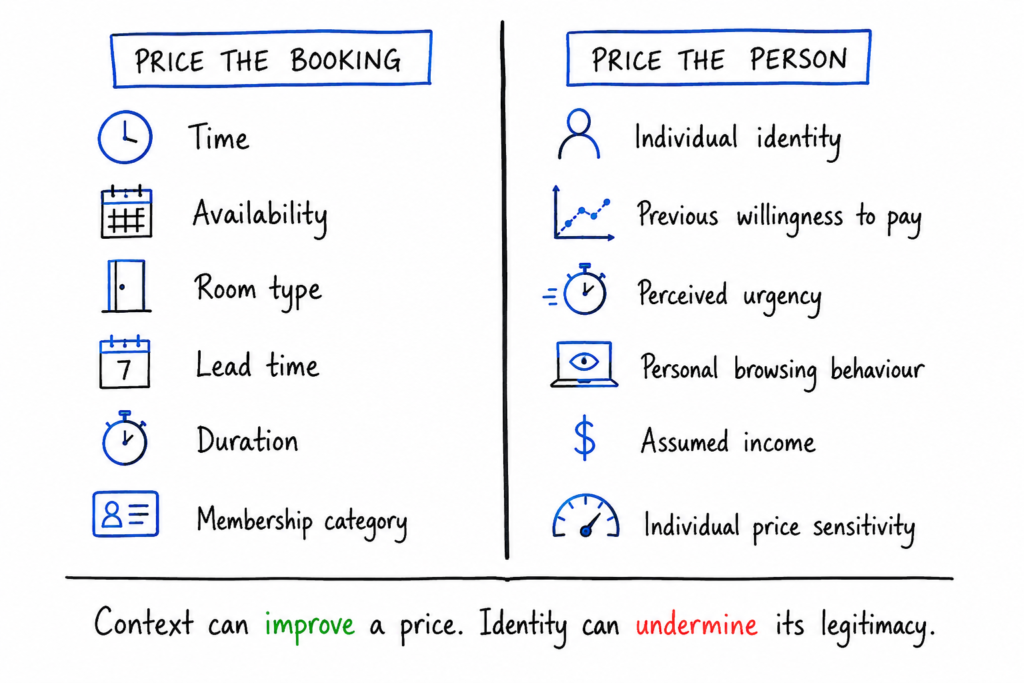
Throughout this investigation, the discussion has focused on prices changing according to context.
Time of day. Availability. Booking lead time. Room type. Historical demand.
Those variables describe the transaction.
But increasingly sophisticated systems can evaluate much more than the transaction.
They may know who is booking. How often they visit. What they have paid before. How urgently they appear to need the space. How likely they are to accept a higher price.
That is where dynamic pricing begins to take on a different form.
Personalized pricing.
And that is where many operators understandably draw a line.
Key Insight:
There is an important difference between pricing the circumstances of a booking and pricing the person making it.
Contextual Pricing Is Already Familiar
Most customers accept that different circumstances can produce different prices.
A larger meeting room costs more than a smaller one.
A last-minute booking may cost more than an advance reservation.
A member may receive a different rate from an external visitor.
Those differences are relatively easy to explain because the customer can see the logic behind them.
The price changes because the product, timing or relationship has changed.
Personalized pricing introduces a very different proposition.
Two customers could request the same room, at the same time, under the same conditions, and receive different prices because an algorithm believes one is willing to pay more.
The economic logic may be defensible. The hospitality logic is much harder.
Fairness Must Be Explainable
One useful test emerged from the interviews.
Could the operator comfortably explain the price difference to the customer?
A peak-time premium is explainable.
A discount for members is explainable.
A lower rate for booking several weeks in advance is explainable.
A higher price because the system believes a particular customer is unlikely to shop around is much harder to defend.
The question isn’t simply whether the algorithm can identify an opportunity.
It’s whether the operator believes that opportunity should be used.
Sidebar: The Explainability Test
Before introducing any pricing rule, ask:
Could we clearly explain this price difference to both customers standing side by side?
If the answer is no, the issue may not be the communication.
It may be the rule itself.
Segmentation Is Not Necessarily Personalization
There is an important distinction between grouping customers and targeting individuals.
Many operators already maintain different prices for:
- Members and non-members
- Corporate accounts and casual visitors
- Long-term and short-term commitments
- Internal bookings and external bookings
- Different membership tiers
These prices reflect defined relationships. They can be communicated in advance.
Everyone within the same category receives the same treatment.
That is different from adjusting a price uniquely for one individual based on inferred willingness to pay.
The boundary may appear subtle from a technical perspective.
From a trust perspective, it is substantial.
“You can cluster people by membership type. That doesn't mean you should optimize against each individual.”
Adrian Palacios, Nexudus
The Most Powerful Signal May Be the One You Choose Not to Use
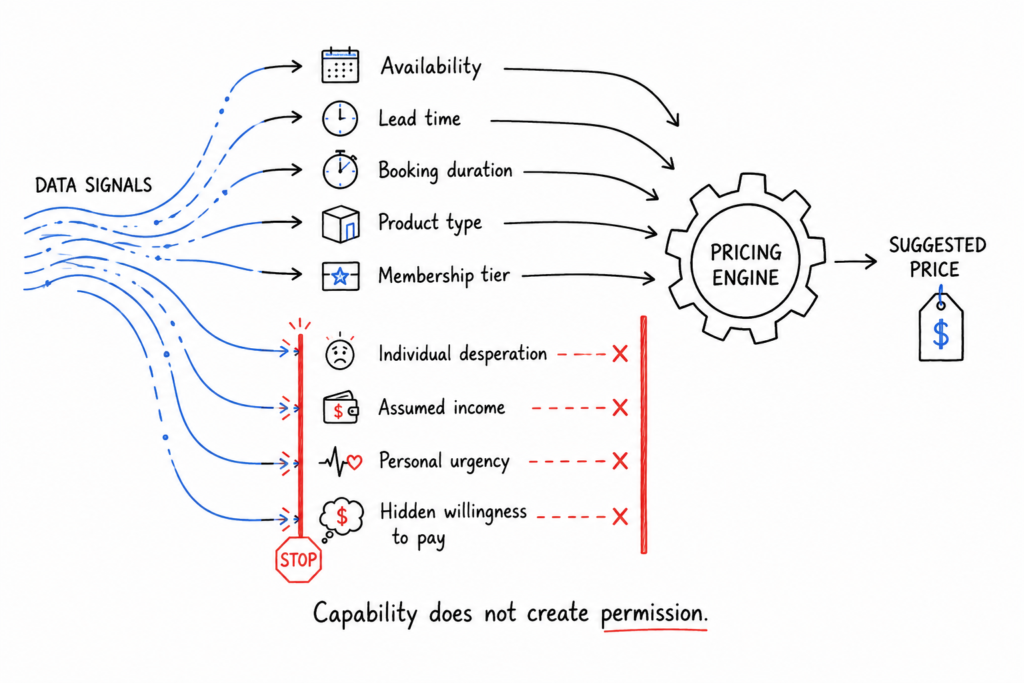
Modern systems will inevitably become capable of analyzing more information.
That doesn’t mean every available signal belongs in a pricing model.
A platform might be able to infer that a customer is under time pressure. It may recognize that they repeatedly book the same room regardless of price. It may determine that they are traveling, hosting an important client, or unlikely to compare alternatives.
All of that information could improve revenue optimization.
But commercial usefulness isn’t the only standard.
Operators also need to consider:
- Fairness
- Privacy
- Brand alignment
- Customer expectations
- The possibility of discrimination
- The long-term cost of losing trust
The most sophisticated pricing strategy may therefore include deliberate restraint.
Not because the technology lacks capability. Because the operator has values.
Set the Rules Before the Algorithm Does
The worst time to define an ethical boundary is after a pricing controversy.
Operators should decide in advance what their systems are (and are not) allowed to optimize.
That requires more than configuring software. It requires governance.
Someone needs to own the pricing strategy.
Someone needs to review unusual outcomes.
Someone needs the authority to override recommendations.
And someone needs to ask whether technically successful decisions still reflect the values of the business.
Without those safeguards, optimization can quietly become the objective rather than a tool that serves it.
Sidebar: Four Guardrails for Responsible Dynamic Pricing
1. Use transparent variables
Base prices on factors customers can reasonably understand.
2. Keep humans accountable
Automation should not make responsibility disappear.
3. Review outcomes, not just revenue
Look for unexpected disparities, complaints, and behavioral changes.
4. Define prohibited signals
Document which customer information must never influence price.
Every Operator Will Draw the Line Differently
There is no universal boundary.
A transactional meeting-room marketplace may tolerate more price variability than a membership-led neighborhood workspace.
A global operator may require strict rules and central oversight.
An independent operator may rely more heavily on local judgement.
The right answer will depend on the product, the customer relationship, and the promise the brand has made.
But every operator needs an answer.
Because as technology advances, avoiding the question won’t preserve the status quo.
It will simply allow software, vendors, or commercial pressure to answer it by default.
The Real Competitive Advantage
At the beginning of this investigation, dynamic pricing appeared to be a technology story.
Then it became a revenue story.
Eventually, it became clear that it was really a leadership story.
Software can identify demand.
It can recommend a price.
It can optimize thousands of bookings faster than any human team.
But it cannot decide what kind of business an operator wants to build.
It cannot determine how members should feel.
It cannot weigh an incremental gain against a damaged relationship.
And it cannot define the meaning of hospitality.
Those decisions still belong to people.
What we learned:
The defining question isn’t how much technology can optimize.
It’s how much optimization belongs in a hospitality business.
Questions for Operators
Before allowing pricing systems to become more personalized, ask:
- Are we pricing the booking, or the person?
- Which customer characteristics are legitimate pricing inputs?
- Which inputs should be prohibited?
- Could we explain every price difference openly?
- Who is accountable when the algorithm produces an unfair outcome?
- Where does our brand draw the line?
Final Thought
Dynamic pricing is already here.
It exists in negotiations, discounts, premiums, membership tiers, and manual pricing reviews.
Technology is simply making those decisions faster, more frequent and more precise.
The commercial opportunity is real. So are the risks.
The operators who benefit most won’t necessarily be those who automate the fastest.
They will be the ones who define their objectives clearly, protect the relationships that matter, and understand that better optimization does not always mean more optimization.
Coworking may increasingly borrow the tools of airlines and hotels.
But it should not forget what makes it different.
Community. Relationships. Belonging. The human touch.
The technology can calculate the price.
Operators still have to decide the value.